

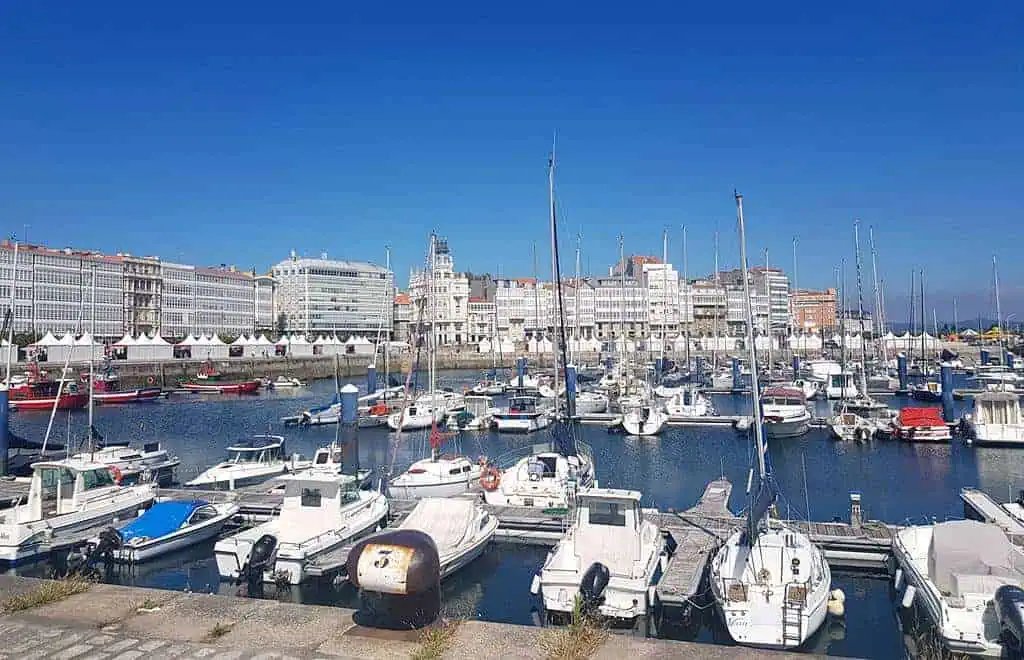
La Coruña Cruise Port Guide (Spain)
Some links in this post are affiliate links. If you book through them, I may earn a small commission at no extra cost to you. Thanks for supporting my work!
As an Amazon Associate, I earn from qualifying purchases. Read my full disclosure here.
La Coruña is one of the easiest cruise ports to explore in northern Spain.
Ships dock right beside the city center, so you can step off the ship and start exploring almost immediately.
I’ve visited La Coruna several times on cruises and had the chance to walk through the historic old town, climb the Tower of Hercules, browse the waterfront shops, and take a trip to Santiago de Compostela.
Because the port sits directly next to the city, most of the main sights can be reached on foot.
In this La Coruna cruise port guide, I’ll explain where cruise ships dock, how easy it is to explore independently, and what you can realistically see during a typical port day.
Where Cruise Ships Dock in La Coruña
Cruise ships dock at Muelle de Trasatlánticos, the main cruise quay in La Coruna, located right beside the city center.
There is no tendering here.
Passengers walk directly off the ship and through a small terminal building before exiting the port area.

The terminal is simple but usually includes a tourist information desk where you can pick up a free city map, along with a few small souvenir stalls.
Outside the terminal, you’ll typically see parking areas used by shore excursion buses.
Because the cruise pier sits directly next to the historic waterfront district, the city begins almost immediately beyond the port gates.
La Coruna is also an important commercial port for Galicia, handling cargo traffic and regional trade alongside visiting cruise ships.
Can You Explore La Coruña on Your Own?
Yes. La Coruna is one of the easiest cruise ports in northern Spain to explore independently.
The historic center sits right next to the cruise pier, and most of the main sights are concentrated around the harbor and old town. Navigation is simple, and distances are short.
Unless you plan to visit Santiago de Compostela or explore farther along the coast, most cruisers have no difficulty exploring La Coruna on their own.
Getting Around from the Port
Walking
Most cruise visitors explore La Coruna on foot.
The historic center, marina, and main landmarks are all located close to the cruise pier, so walking is usually the easiest way to get around.
The city is relatively flat and easy to navigate, and the waterfront promenade connects many of the main areas cruisers typically visit.
Public Buses
Local buses operate throughout the city and can be useful if you want to reach locations farther from the center.
For example, bus #3 connects the city center with the Tower of Hercules, the famous Roman lighthouse located on the northern coast of the city.
Bus stops can be found along Avenida da Mariña, the waterfront boulevard near the marina known for its historic buildings with distinctive glass balconies.
Taxis
Taxis are widely available near the cruise terminal and throughout the city center.
They are useful if you want to visit places outside walking distance or if you plan to travel to nearby destinations such as Santiago de Compostela, the historic pilgrimage city located about an hour from the port.
Train Connections
If you plan to visit Santiago de Compostela independently, trains run regularly from A Coruña Railway Station.
The station is about 2.5 km (1.5 miles) from the cruise port, roughly a 10-minute taxi ride.
Check train schedules and tickets on the official Renfe webpage.
Shore Excursions from La Coruna
Many cruisers book excursions to Santiago de Compostela or guided tours covering the main landmarks in the city.
👉 Browse shore excursions on Viator or GetYourGuide — trusted platforms popular for cruisers
🛳️ Planning more Mediterranean ports?
My Mediterranean Cruise Port Guide eBook covers 45 ports with practical tips on getting around, walking routes, shore excursions, and what you can see and do during a cruise stop.
👉 Get the guide here


How Much Time You Need in La Coruña
Short stop (4–5 hours)
You’ll have enough time to explore the historic center, walk along the marina, and see a few of the main landmarks in La Coruna.
Typical stop (7–9 hours)
This allows a relaxed visit to the city, including the old town, waterfront promenade, and possibly the Tower of Hercules.
Long stop (10+ hours)
With a longer stay, you can comfortably take an excursion to Santiago de Compostela and still have some time to explore La Coruna before returning to the ship.
What to Do in La Coruña Cruise Port
If it’s your first visit, these are the best things to do in La Coruña on a cruise, from exploring the historic center on foot to taking a day trip to Santiago de Compostela.
Visit Santiago de Compostela
One of the main reasons many cruises stop in La Coruna is the opportunity to visit Santiago de Compostela, located about 75 km (47 miles) from the port.
The city is the final destination of the Camino de Santiago pilgrimage route, which has brought travelers here for centuries.
At its center stands the Cathedral of Santiago de Compostela, believed to hold the remains of Saint James the Apostle.


The historic center is a UNESCO World Heritage Site filled with medieval squares, monasteries, and stone streets lined with cafés and small shops.
Travel time from the port to Santiago de Compostela is about one hour each way, so most cruise visitors join an organized excursion or guided tour.
Allow 4–5 hours total, including transport and time to explore the cathedral area.
👉 See Santiago de Compostela day trips and excursions
Explore La Coruña Old Town on Foot
If you prefer to stay in the city, the historic district is an easy and enjoyable option.
La Coruna developed as an important Atlantic trading port, and much of the waterfront still reflects that maritime history.
Narrow streets lead to historic squares, churches, and traditional Galician buildings.

Within a short walk of the cruise port, you can see:
- Plaza de María Pita — the city’s main square, named after the local heroine who defended La Coruna during an English attack in 1589
- San Antón Castle — a 16th-century coastal fortress built to defend the harbor, now housing an archaeology museum
- Old Town of A Coruña — a historic district with cobbled streets, churches, and small local squares


The marina nearby is also a pleasant place to stop for a coffee or try local Galician wine.
On one of my visits, I joined a small wine tasting at NH Collection A Coruña Finisterre, a waterfront hotel located just a few minutes from the cruise port.

Galicia is known for white wines such as Albariño, and tastings like this offer a simple way to experience the region’s wine culture during a cruise stop.
Allow 2–3 hours for a relaxed walk through the historic center, or a bit longer if you stop for wine tasting along the marina.
👉 Browse La Coruna walking tours and activities
Visit the Tower of Hercules
The Tower of Hercules is the city’s most famous landmark.
Built by the Romans in the 1st century AD, this lighthouse is the oldest working lighthouse in the world and has guided ships along the Atlantic coast for nearly two thousand years.
Today, it is a UNESCO World Heritage Site.

The tower stands on a coastal headland surrounded by a large sculpture park and walking paths with ocean views.


It is located about 2.6 km (1.6 miles) from the cruise port.
Many visitors reach it by taxi or bus, although it is also possible to walk there if you have enough time.
Plan 1–2 hours for the visit.
👉 Check Tower of Hercules guided tours available
Walk the Coastal Promenade
La Coruna has one of the longest seaside promenades in Europe, stretching for several kilometers along the Atlantic coastline.
The path connects beaches, parks, historic districts, and viewpoints overlooking the ocean.

Along the way, you’ll see the city’s distinctive glass-fronted balconies, designed to protect homes from Galicia’s strong coastal winds.
Many cruisers spend part of their port day walking sections of this promenade and enjoying the views.
The route is also popular for biking, with dedicated cycling lanes running along much of the waterfront.
You can easily adjust the distance depending on your time, from a short harbor stroll to a longer coastal walk or bike ride.
👉 Explore e-bike tours and activities
Relax at the City Beaches
La Coruna also has several urban beaches located close to the city center.
Playa del Orzán and Playa de Riazor are two of the most popular.
Both sit along the city’s main coastal promenade and are known for their wide sandy shores and views across the bay.
During the summer months, locals come here to swim, surf, and enjoy the waterfront cafés.
Even outside the swimming season, the promenade around the beaches is a pleasant place for a walk.
👉 Browse coastal tours and activities
Optional Day Trip: Betanzos
If you prefer a quieter historical destination, the small town of Betanzos lies about 25 minutes from La Coruna.
The town was an important medieval center and is known for its well-preserved historic core.
It sits on a hill above the estuary where the Mandeo and Mendo rivers meet the sea.
Betanzos is particularly known for its Gothic churches, including San Francisco, Santiago, and Santa María do Azogue, built between the 14th and 15th centuries.

This destination is sometimes included in guided excursions exploring the historic towns of Galicia.
👉 Explore Betanzos day trips and excursions
Optional Full-Day Excursion: Lugo
A longer excursion option is Lugo, located about 1 hour 10 minutes from La Coruna.
The city is famous for its Roman walls, built during the 3rd and 4th centuries to defend the settlement from invasions.

The walls stretch for more than 2 kilometers and remain almost completely intact, making them one of the best-preserved Roman fortifications in Europe.
Visitors can walk along the top of the walls and explore the historic center inside, which includes the 12th-century Lugo Cathedral and several medieval squares.
Should You Book a Shore Excursion in La Coruña?
You usually don’t need a shore excursion if you plan to stay in La Coruna itself.
The city center is easy to explore independently, and most of the main sights are close to the cruise port.
However, booking an excursion makes sense if you want to visit Santiago de Compostela or explore smaller towns in the Galicia region.
These destinations are located outside the city and require organized transport.
For visits within La Coruna, exploring on your own is usually the simplest and most practical option.
Practical Tips for Cruise Visitors
- Currency: Spain uses the Euro (EUR). Cards are widely accepted, but it’s useful to carry a little cash for small cafés or taxis.
- Safety: La Coruna is generally safe, but keep an eye on belongings in busy areas like Praza de María Pita, the marina, and main shopping streets.
- Shopping: The main shopping area is Rúa Real, a pedestrian street near the port with local boutiques, shoe stores, and souvenir shops.
- Summer Weather: Summers are usually mild, but the Atlantic sun can still feel strong. A light jacket is useful because coastal winds can make temperatures change quickly.
- Opening Hours: Some smaller shops close for a midday break (siesta), usually between 2:00 pm and 4:30 pm.
Is It Worth Staying in Town?
La Coruna is one of the few cruise ports where staying in the city works very well.
Because the historic center sits right next to the cruise pier, you can comfortably explore the old town, waterfront promenade, and several major landmarks without needing transport.
However, many cruisers choose to visit Santiago de Compostela, one of Spain’s most famous pilgrimage cities located about an hour from the port.
If you enjoy historic cities and want to see a UNESCO-listed cathedral and medieval streets, Santiago is worth the trip.
If you prefer a relaxed day with coastal views, historic squares, and easy walking, staying in La Coruna is a great option.
FAQ
❓ Is La Coruna walkable from the cruise port?
Yes. The cruise terminal is located right beside the city center, and many of the main sights can be reached within a short walk.
❓ Do cruise ships tender in La Coruna?
No. Cruise ships dock directly at the pier at Muelle de Trasatlánticos, so passengers can walk off the ship and into the city.
❓ How far is Santiago de Compostela from La Coruna cruise port?
Santiago de Compostela is about 75 km (47 miles) from the port and the drive usually takes around one hour.
❓ Can you visit Santiago de Compostela on your own from La Coruna?
Yes. Many visitors travel independently by train, bus, or private transfer, although cruise excursions are also widely available.
❓ How much time do you need in La Coruna?
Most cruisers spend 2–3 hours exploring the city center, or most of the day if visiting Santiago de Compostela.
❓ What is La Coruna known for?
La Coruna is known for the Tower of Hercules, the oldest working lighthouse in the world, as well as its historic harbor and glass-fronted balconies.
Helpful Resources
- Port of La Coruna cruise information — terminal details and port updates
- A Coruña tourism website — maps, attractions, and visitor planning information
- Train schedules and tickets — check connections if traveling to Santiago de Compostela
- City bus routes — useful for reaching places like the Tower of Hercules
Ports Often Included with La Coruña
La Coruna is commonly included on Northern Europe, Atlantic coast, and Iberian Peninsula cruise itineraries.
These sailings usually combine ports in Spain, Portugal, France, and the British Isles.
- Bilbao — Many cruises along Spain’s northern coast stop here to visit the famous Guggenheim Museum and explore the Basque Country.
- Lisbon — A major cruise hub in Portugal, often paired with La Coruna on Iberian Peninsula itineraries.
- Le Havre — This port serves as the gateway to Paris and Normandy, commonly included on cruises between France and Spain.
- Southampton — Many Atlantic and Northern Europe cruises start or end here, often including La Coruna on the route south.
- Vigo — Another Galician port frequently visited on the same itineraries, offering access to the historic city of Santiago de Compostela and the scenic Rías Baixas coastline.
Planning more cruises? You can browse all my regional cruise port guides here: Mediterranean • Caribbean • Northern Europe • USA & Canada • Australia & New Zealand • Middle East



I was just in La Coruna this past week. We did the wine tasting at the NH Collection hotel. Do you remember what brands the wines were that you did at your tasting?
Hi, amazing, I hope you had a great time! Unfortunately, I can’t remember the wine brands, it was a long time ago 🙂