Napier Cruise Port Guide (New Zealand)
Some links in this post are affiliate links. If you book through them, I may earn a small commission at no extra cost to you. Thanks for supporting my work!
As an Amazon Associate, I earn from qualifying purchases. Read my full disclosure here.
Located on the east coast of New Zealand’s North Island, Napier cruise port is one of the main gateways to the Hawke’s Bay region.
The city is best known for its Art Deco architecture, nearby wineries, and easy independent sightseeing.
Although ships dock in a commercial port area, Napier is still easy to explore on your own once you reach town.
Most cruise visitors spend the day walking through the Art Deco center, visiting wineries, or exploring Hawke’s Bay.
In this guide, you’ll find docking information, getting around tips, shore excursions, and the best things to do in Napier cruise port.
Where Cruise Ships Dock in Napier
Cruise ships dock at the Port of Napier, a commercial cargo port located close to the city center.
Ships normally berth alongside the pier, so tendering is rare.
Because the port is an active container terminal, passengers cannot walk out of the port area.
Free shuttle buses usually transfer cruise visitors to downtown Napier near Marine Parade, and the ride normally takes around 5–10 minutes.

There are no tourist facilities at the pier itself, but once you reach town, you’ll find cafés, shops, public toilets, taxis, tour operators, and the waterfront promenade within a short walking distance.
Napier is one of the easier New Zealand cruise ports to explore independently thanks to its compact and walkable downtown area.
Can You Explore Napier on Your Own?
Yes — Napier works well as a DIY cruise port for most visitors.
The main downtown area around Marine Parade and Emerson Street is flat, compact, and easy to walk.
If your plan is simply to explore the Art Deco center, waterfront, aquarium, or cafés, you do not need a tour.
Independent travel becomes less practical if you want to visit:
- wineries outside town
- Cape Kidnappers
- rural farm experiences
- Māori cultural tours
- rafting or countryside activities
Those places require transportation and involve longer driving distances.
Getting Around from the Port
Walking in Napier
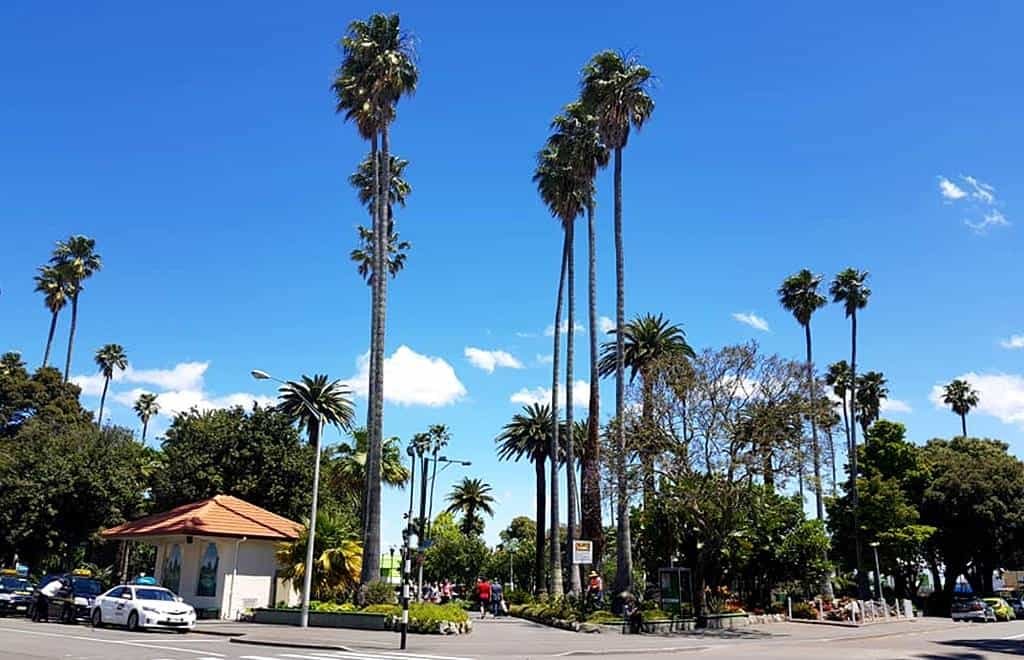
Once the shuttle drops you off downtown, most central attractions are walkable.
Marine Parade runs along the waterfront and connects many of the main sights, including parks, monuments, gardens, and the aquarium.
The Art Deco district begins only a few minutes inland from the waterfront.
Napier is generally flat and easy to explore on foot.
Shuttle Buses
Free shuttle buses are commonly provided between the port and downtown during cruise calls.
The drop-off location is usually near Marine Parade.
Return shuttle queues can become busy close to all-aboard time.
Taxis and Rideshares
Taxis are normally available near the shuttle area and are useful for wineries, Bluff Hill Lookout, or nearby beaches.
Napier is small, so taxi fares within the city are usually reasonable.
Bike Rentals
Cycling is one of the most popular independent activities in Napier.
Hawke’s Bay has an extensive network of cycling trails passing vineyards, rivers, orchards, and coastal scenery.
Several operators offer bike rentals and guided cycling tours near the cruise shuttle area.
Shore Excursions from Napier
Napier is a port where excursions make sense if you want to experience the wider Hawke’s Bay region rather than stay in town.
The most popular tours usually include:
- winery visits
- Hawke’s Bay cycling trails
- Cape Kidnappers
- farm experiences
- Art Deco tours
- Māori cultural experiences
👉 Browse shore excursions on Viator or GetYourGuide — trusted platforms widely used by cruise travelers
How Much Time You Need in Napier
Napier works well for both short and long cruise stops.
- 2–3 hours — enough for a waterfront walk, Art Deco center, aquarium, and cafés
- 4–6 hours — allows time for wineries, cycling, or Bluff Hill
- Full-day stop — enough for Cape Kidnappers, countryside tours, rafting, or longer winery visits
Because the city center is compact, Napier is less stressful than many larger cruise ports.
What to Do in Napier Cruise Port
If it’s your first visit, these are the main things to do in Napier during a cruise stop, starting with the city itself and followed by the most popular Hawke’s Bay excursions.
Explore Napier on Foot
For many cruise visitors, walking around Napier is the main experience.
The city was almost completely rebuilt after the 1931 earthquake and is now known for its well-preserved Art Deco architecture.
Much of the downtown still reflects the style of the 1930s.


Most visitors explore:
- Marine Parade — Napier’s waterfront promenade with gardens, ocean views, cafés, and memorials.
- Emerson Street — the main shopping street lined with Art Deco buildings, cafés, and boutiques.
- Art Deco downtown blocks — central streets rebuilt in the distinctive architectural style of the 1930s.
- Pania of the Reef statue — a famous local landmark inspired by a Māori legend.
- Sound Shell and waterfront gardens — a historic outdoor venue and green waterfront area.
This is an easy option for shorter port days and works well without a tour.
Allow around 2–3 hours.
👉 Browse Napier walking tours and activities
Taste Hawke’s Bay Wines
Wine tasting is one of the main reasons cruise ships stop in Napier.
The Hawke’s Bay region is one of New Zealand’s oldest wine-producing areas and is especially known for red wines and Chardonnay.
Vineyards surround both Napier and nearby Hastings, with several wineries located within a short drive from the port.

Popular winery visits often include:
- Mission Estate Winery
- Church Road Winery
- Sileni Estates

Many tours combine wine tasting with countryside scenery and local food.
Allow at least 3–5 hours, depending on the number of wineries visited.
👉 Explore winery tours and excursions
Cycle the Hawke’s Bay Trails
Cycling is one of the signature shore activities in Napier.
The Hawke’s Bay Trails network stretches through vineyards, farmland, rivers, wetlands, and coastal landscapes.

The trails are generally considered beginner-friendly, although distances vary depending on the route.
Many cruise passengers choose either:
- self-guided bike rentals
- guided cycling tours with winery stops
This is one of the better ways to experience the countryside without spending the entire day on a bus.
Most cycling excursions last around 3–5 hours.
👉 Check guided bike tours available
See Cape Kidnappers and the Gannet Colony
Cape Kidnappers is one of the best-known natural attractions near Napier.
The cape is famous for dramatic coastal cliffs and the world’s largest accessible mainland gannet colony.
Large seabirds nest along the cliffs during much of the year, and many excursions focus on wildlife viewing and coastal scenery.
Getting there usually involves a longer drive plus either:
- 4WD tours
- nature safaris
- guided walks
This excursion takes a significant portion of the port day and works best during longer cruise stops.
Allow around 5–7 hours total.
👉 See Cape Kidnappers day trips and excursions
Visit the National Aquarium of New Zealand
The National Aquarium of New Zealand is one of the easiest attractions to visit independently from the cruise shuttle area.
The aquarium focuses on New Zealand marine life and native species, including kiwi birds, tuatara reptiles, penguins, stingrays, and sharks.
The underwater tunnel is the main highlight for many visitors.
This is a good fallback option for:
- shorter port stays
- families
- rainy or windy weather
Allow around 1–2 hours.
👉 Browse aquarium tickets and guided activities
Experience Māori Culture in Hawke’s Bay
Some shore excursions focus on Māori history, traditions, and storytelling in the wider Hawke’s Bay region.

These tours usually take place outside Napier in smaller coastal or rural communities and often include:
- traditional history
- legends and cultural storytelling
- local landscapes connected to Māori heritage
Because these experiences are farther from the port, they work better as organized excursions rather than independent visits.
Allow most of the day.
Should You Book a Shore Excursion in Napier?
It depends on how you want to spend your day.
If you mainly want to explore Napier itself, independent sightseeing is easy and usually enough for a relaxed port day.
A shore excursion is more worthwhile if you want to:
- visit multiple wineries
- cycle longer Hawke’s Bay trails
- visit Cape Kidnappers
- explore rural Hawke’s Bay
- experience Māori cultural tours
Many attractions outside town are spread across the countryside, so organized tours make transportation easier.
Practical Tips for Cruise Visitors
- The currency in New Zealand is the New Zealand Dollar (NZD).
- Credit cards are widely accepted throughout Napier and Hawke’s Bay.
- Emerson Street is the main shopping area for boutiques, cafés, and local stores.
- Marine Parade is the main waterfront area where most cruise visitors spend time.
- Napier is generally considered a safe and relaxed cruise destination.
- Bring sun protection, especially during the summer cruise season.
- The weather can change quickly, so a light jacket is useful even on warmer days.
- Return shuttle lines may become long close to all-aboard time.
- Wine tours often require advance booking on busy cruise days.
Is It Worth Staying in Town?
Yes — especially for first-time visitors or shorter cruise stops.
Napier is one of the better New Zealand ports for independent exploration because the downtown area is compact, attractive, and easy to navigate.
If you have a full-day stop and enjoy wine, scenery, or outdoor activities, Hawke’s Bay excursions add much more variety beyond the town itself.
FAQ
❓ Is Napier walkable from the cruise port?
No. Cruise ships dock at a commercial cargo port, and passengers cannot walk through the terminal area. Free shuttle buses usually transport cruise visitors to downtown Napier in about 5–10 minutes.
❓ Do cruise ships tender in Napier?
Usually not. Cruise ships normally dock alongside the pier at the Port of Napier.
❓ How far is Napier town from the cruise ship?
Downtown Napier is located about 1 km (0.6 miles) from the port area. Because walking through the terminal is not allowed, cruise passengers normally use the free shuttle bus.
❓ Can you explore Napier without a shore excursion?
Yes. Napier is one of the easiest New Zealand cruise ports to explore independently thanks to its compact downtown, flat streets, and waterfront location.
❓ What are the best things to do in Napier on a cruise?
The most popular cruise activities in Napier include exploring the Art Deco center, visiting Hawke’s Bay wineries, cycling the Hawke’s Bay Trails, and taking excursions to Cape Kidnappers.
❓ Is Napier worth visiting on a cruise?
Yes. Napier is known for its Art Deco architecture, nearby wineries, coastal scenery, and easy independent sightseeing, making it one of the more relaxed New Zealand cruise ports.
Helpful Resources
- Port of Napier Cruise Information — cruise ship schedules and port updates
- Hawke’s Bay Tourism — local attractions, wineries, and visitor information
- National Aquarium of New Zealand — tickets, exhibits, and opening hours
- Hawke’s Bay Trails — cycling maps and trail planning
Ports Often Included with Napier
Many New Zealand cruise itineraries that visit Napier also include a mix of North Island cities, wine regions, and scenic South Island ports.
- Auckland — New Zealand’s main cruise turnaround port and a common starting point for itineraries.
- Tauranga — popular for Rotorua geothermal areas and Māori cultural experiences.
- Wellington — the capital city known for museums and a walkable waterfront.
- Picton — a scenic South Island stop near the Marlborough Sounds wine region.
- Dunedin — known for wildlife tours and historic Scottish heritage.
- Bay of Islands — famous for beaches, dolphin cruises, and historic seaside towns.
- Akaroa — known for French heritage, harbor cruises, and volcanic scenery.
- Milford Sound — famous for dramatic fjords, waterfalls, and scenic cruising through Fiordland.
Planning more cruises? You can browse all my regional cruise port guides here: Mediterranean • Caribbean • Northern Europe • USA & Canada • Australia & New Zealand • Middle East