Split Cruise Port Guide (Croatia)
Some links in this post are affiliate links. If you book through them, I may earn a small commission at no extra cost to you. Thanks for supporting my work!
As an Amazon Associate, I earn from qualifying purchases. Read my full disclosure here.
Split is Croatia’s second-largest city and the main hub of the Dalmatian coast.
It’s one of the easiest cruise ports to navigate.
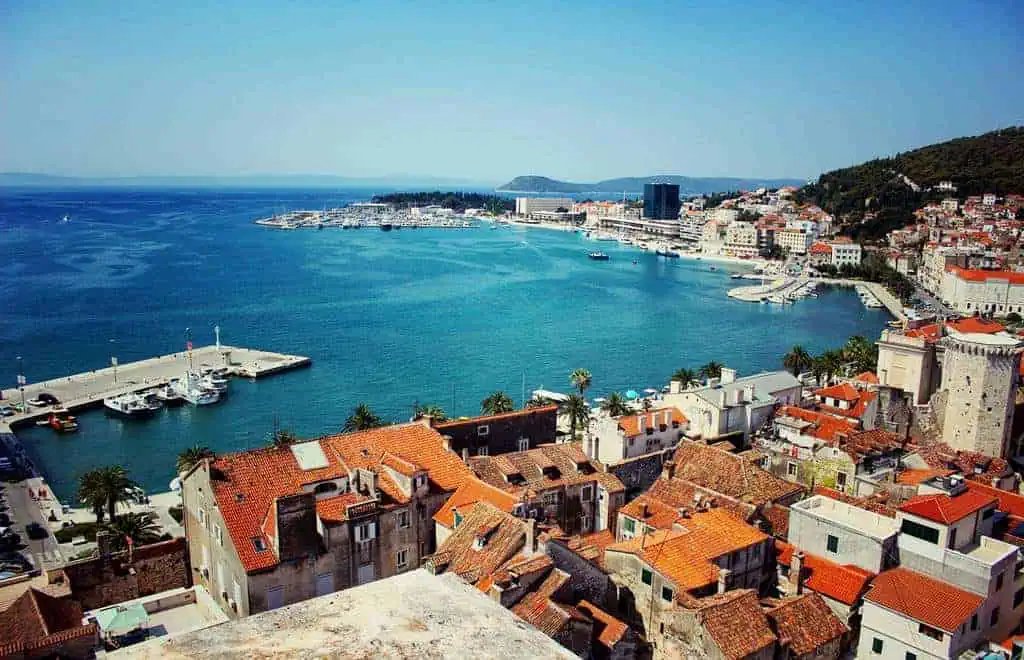
Ships dock directly beside the Old Town, so you can step off and be inside the historic center within minutes.
The port sits next to Diocletian’s Palace, a UNESCO-listed complex that forms the core of the city.
The main promenade (Riva), ferry port, and transport connections are all within a short walk.
From here, you can either explore the Old Town on foot or use the port as a starting point for day trips to nearby islands and national parks.
This Split cruise port guide explains how the port works, what you can realistically do during your stop, and how to plan your time ashore.
Where Cruise Ships Dock in Split
Cruise ships in Split dock directly at the port next to the city center, about a 10-minute walk (800 m / 0.5 miles) from the Old Town and Diocletian’s Palace.
There are several berths, including dedicated cruise piers and spots alongside the ferry terminal.

If your ship docks near the ferry port, you’ll be even closer to the Old Town.
The port can accommodate multiple ships, but most days you’ll see only a few at a time, so congestion is usually manageable.
On the pier, there is a taxi stand and space for tour buses.
Just outside the port area, you’ll find essential services such as a tourist information office, ATMs, currency exchange, banks, small shops, and cafés.
No shuttle buses are needed — you can walk straight from the ship into the historic center.
Can You Explore Split on Your Own?
Yes — Split is very easy to explore independently.
The Old Town is about a 10-minute flat walk from the port, and the route is simple to follow along the waterfront.
There’s no need for transport or advance planning.
Diocletian’s Palace forms the center of the city, and everything is concentrated within a compact area.
Once you arrive, you can explore freely without needing to navigate long distances.
Even on shorter port days, visiting on your own is straightforward and low risk.
Getting Around from the Port
On Foot
Walking is the main way to get around Split from the cruise port.
The route to the Old Town is flat and direct along the waterfront.
Once inside Diocletian’s Palace, everything is close together, and you can explore without needing transport.
Taxis & Ride-Sharing
Taxis are available at the port and throughout the city. Prices are higher during the summer season.
Ride-sharing apps like Uber operate in Split and are often more predictable for short trips.
This is the easiest option if you want to reach nearby beaches or areas outside the Old Town.
Local Buses
The main bus station is located next to the port and is the best option for getting around Split beyond the Old Town.
Buses are useful if you plan to visit places like Marjan Hill or beaches further from the center.
For most cruise visitors staying in the Old Town, they are not necessary.
Shore Excursions from Split
If you plan to leave the city, organized tours are the most reliable option during a cruise stop.
Popular choices include Krka National Park, Trogir, and nearby islands such as Hvar and Brač.
👉 Browse shore excursions on Viator or GetYourGuide — trusted platforms commonly used by cruisers
Hop-On Hop-Off Bus
Open-top sightseeing buses depart from the Riva promenade and cover areas such as Trogir, Klis Fortress, and Salona.
This can be a convenient option if you want a structured overview without organizing transport yourself.
Short Guided Tours in Split
You’ll also find tuk-tuk tours, electric car tours, and small tourist trains operating from the Old Town.
These are short guided rides designed for quick sightseeing.
Renting a Car
Renting a car is usually not necessary for a cruise stop.
The Old Town is within walking distance, and the most popular destinations are easier to visit on a guided tour.
A car only makes sense if you want to explore independently or reach more remote beaches and coastal areas.
🛳️ Planning more Mediterranean ports?
My Mediterranean Cruise Port Guide eBook covers 45 ports with practical tips on getting around, walking routes, shore excursions, and what you can see and do during a cruise stop.
👉 Get the guide here


How Much Time You Need in Split
Most cruise ships stay in Split for 6–8 hours, which is enough time to explore the Old Town and still add one additional activity without rushing.
Short stops (4–5 hours)
Focus on Diocletian’s Palace and the Old Town. The area is compact, so you can see the main squares, walk along the Riva promenade, and return to the ship without time pressure.
Typical stops (6–8 hours)
You can comfortably explore the Old Town and add one more activity, such as walking up Marjan Hill for views or visiting Bačvice Beach, both located within a short distance from the port.
Longer stops (8+ hours)
With more time, you can combine the Old Town with a half-day trip to nearby places like Trogir or consider a boat trip to islands such as Hvar or Brač.
What to Do in Split Cruise Port (How to Plan Your Day)
If you’re wondering what to do in Split cruise port, the main decision is how far you want to go.
You can stay in the Old Town and explore Diocletian’s Palace, add a nearby viewpoint or beach, or use the port as a base for a half-day trip to nearby towns, islands, or national parks.
Here are the main ways to plan your time ashore.
Explore Diocletian’s Palace and the Old Town
This is the main reason cruise ships stop in Split and the best place to start your visit.
Diocletian’s Palace is a 4th-century Roman complex built for Emperor Diocletian.

Today, it forms the heart of Split, with narrow streets, small squares, and historic buildings still in daily use.
Inside the Old Town, you can see:
- Peristyle Square — the central courtyard of the palace, lined with columns and Roman stonework
- Saint Domnius Cathedral — originally built as Diocletian’s mausoleum
- The Cellars — large underground halls used as storage in Roman times
- The four gates — original entrances connecting the palace to the city
Everything is within a compact area, so you can explore at your own pace without planning a route.
Allow about 1–2 hours for a relaxed visit.
👉 Browse Split walking tours and guided visits
Walk Along the Riva Promenade
The Riva runs along the waterfront just outside the Old Town and is the main gathering place in Split.
It developed as the city’s harbor front and is now lined with palm trees, cafés, and open views of the marina.
This is where you’ll pass when walking between the port and the Old Town.

It’s not a separate attraction but part of the overall experience — a short walk here is usually included naturally in your visit.
Allow 20–40 minutes, depending on how long you stop.
👉 Explore Riva Promenade tours and activities
Visit Marjan Hill or a Nearby Beach
If you want a break from the Old Town, the closest option is Marjan Hill.
This forested park rises just west of the city and is known for walking trails and viewpoints overlooking Split and the coastline.
The entrance is about a 15–20 minute walk from the Old Town.

You can:
- walk up to the first viewpoint (short but uphill)
- take a bus or taxi to higher points
- continue toward beaches like Kašjuni or Bene
Alternatively, Bačvice Beach is only about a 5-minute walk from the port.
It’s a sandy beach with shallow water, popular for swimming and local games like picigin.
Allow 1.5–3 hours, depending on how far you go.
👉 Browse Marjan Hill tours and beach transfers
Take a Half-Day Trip to Trogir
Trogir is one of the most common excursions from Split and a realistic option during a standard port stop.
Located about 30 minutes west of Split, Trogir is a small island town with a UNESCO-listed Old Town.
It’s known for its Venetian architecture, narrow streets, and compact historic center.

Most visits include:
- time to walk the Old Town streets and take photos
- the cathedral and main square
- the waterfront promenade
This works well as a half-day trip and can be done by tour, taxi, or organized transport.
Allow 3–4 hours total, including travel time.
👉 Browse Trogir day trips and guided tours
Visit Krka National Park
Krka National Park is one of the most popular full excursions from Split, focused on nature rather than the city.
Located about 1.5 hours away, the park is known for waterfalls, wooden walking paths, and river landscapes.
The main highlight is Skradinski Buk, a large waterfall area accessible by boat or on foot.


This is a time-commitment decision and best suited for longer port stays.
Allow 5–7 hours total.
👉 Explore Krka National Park tours and tickets
Take a Boat Trip to Nearby Islands
Split is a major departure point for island trips along the Dalmatian coast.
Popular options include:
- Hvar — known for its harbor and historic center
- Brač — famous for beaches like Zlatni Rat
- Blue Cave tours — combined island-hopping experiences

These tours usually involve multiple stops and fixed schedules, so timing is important on a cruise day.
This option works best if your ship has a long stay in port.
Allow 5–8 hours, depending on the itinerary.
👉 Browse island tours and excursions
Visit Klis Fortress or Salona (Optional)
If you prefer something closer and less time-consuming, Klis Fortress and Salona are both within 20–30 minutes of Split.
Klis Fortress sits above the city and offers wide views over the coast.
It has a long military history and was used as a filming location for Game of Thrones.

Salona is an archaeological site with Roman ruins, including an amphitheater and early Christian structures.
It was once the capital of Roman Dalmatia.

These are smaller, more focused visits and are usually combined with other stops.
Allow 2–3 hours.
Should You Book a Shore Excursion in Split?
You don’t need a shore excursion to enjoy Split itself.
The Old Town is within walking distance, and most visitors explore it on their own.
An excursion makes sense if you plan to leave the city.
Places like Krka National Park, Trogir, or the islands involve travel time and fixed schedules, so a guided tour helps keep everything organized and ensures you return on time.
If you prefer to stay in Split, going independently is simple and low risk.
Practical Tips for Cruise Visitors
• The local currency is the euro (€), and cards are widely accepted in shops, cafés, and taxis.
• The Old Town has uneven stone streets, so wear comfortable shoes with a good grip.
• Summer can be very hot, so bring water, sun protection, and plan to take breaks in the shade.
• The port area is busy on cruise days, but everything is within walking distance, so allow extra time when returning to the ship.
• Pickpocketing is rare but possible in crowded areas like the Riva and inside Diocletian’s Palace, so keep an eye on your belongings.
Is It Worth Staying in Town?
Yes — Split is one of the few cruise ports where staying in town is enough for a full and satisfying visit.
The Old Town is large, historic, and located right next to the port, so you don’t need transport or extra planning to fill your time.
Even on shorter stops, you can see the main sights and still have time to relax along the waterfront.
Leaving Split for a half-day trip can be rewarding, but it’s not necessary unless you’ve already visited or prefer a more structured excursion.
FAQ
❓ Is Split cruise port walkable from the ship?
Yes, Split cruise port is fully walkable. The Old Town and Diocletian’s Palace are about a 10-minute flat walk from where cruise ships dock.
❓ Do you need a shuttle bus in Split cruise port?
No, shuttle buses are not needed. The cruise port is located next to the city center, so you can walk directly into the Old Town.
❓ How far is Split Old Town from the cruise port?
Split Old Town is about 800 meters (0.5 miles) from the cruise port, which takes around 10 minutes on foot.
❓ Can you visit Split without a tour?
Yes, Split is easy to visit independently. The main sights are within walking distance, and no transport or guided tour is required.
❓ How much time do you need in Split cruise port?
Most visitors need 4–6 hours to explore the Old Town and main sights. With 6–8 hours, you can add a nearby beach, viewpoint, or short trip outside the city.
❓ Is Split cruise port a tender port?
No, Split is a docking port. Cruise ships berth directly at the pier next to the city center.
❓ What is the best thing to do in Split cruise port?
The main experience is exploring Diocletian’s Palace and the Old Town. Most visitors combine this with a walk along the Riva promenade or a short visit to a nearby beach or viewpoint.
Helpful Resources
• Port of Split — docking information, port layout, and ferry traffic updates
• Split Tourist Board — maps, attractions, and practical visitor information for the Old Town
• Promet Split — local bus routes and schedules if traveling beyond the city center
• Split Ferry Port — ferry schedules and routes to nearby islands like Hvar and Brač
Ports Often Included with Split
- Dubrovnik — known for its walled Old Town and one of the most visited cruise destinations in the Adriatic
- Kotor — located inside a dramatic bay, with a compact medieval Old Town and one of the most scenic sail-ins in Europe
- Corfu — a green Ionian island with a UNESCO-listed Old Town influenced by Venetian architecture
- Katakolon — a small port used as the gateway to Ancient Olympia, one of Greece’s most important archaeological sites
- Santorini — known for cliffside villages and caldera views, typically accessed by tender boats
- Mykonos — a popular Cycladic stop with whitewashed streets, windmills, and easy access to Delos
- Athens — usually visited via Piraeus port, known for landmarks like the Acropolis and as a common embarkation or turnaround port
Planning more cruises? You can browse all my regional cruise port guides here: Mediterranean • Caribbean • Northern Europe • USA & Canada • Australia & New Zealand • Middle East