Civitavecchia Cruise Port Guide (Rome)
Some links in this post are affiliate links. If you book through them, I may earn a small commission at no extra cost to you. Thanks for supporting my work!
As an Amazon Associate, I earn from qualifying purchases. Read my full disclosure here.
This Civitavecchia cruise port guide explains what cruisers need to know when visiting the main cruise gateway to Rome.
The Port of Civitavecchia is located about 80 km (50 miles) from Rome, so reaching the city requires additional travel planning during a cruise stop.
Many passengers come here specifically to visit Rome, while others choose to spend the day exploring Civitavecchia itself.
Because the distance between the port and Rome is significant, planning your transport and timing in advance makes a big difference.
I’ve visited Rome several times, both on cruises and land trips, so in this guide I’ll explain what realistically works during a cruise stop, how to get from Civitavecchia to Rome, and how to plan your limited time ashore.
Where Cruise Ships Dock in Civitavecchia
Roma Cruise Terminal (RCT)
Cruise ships dock at the Port of Civitavecchia, the main cruise gateway for visiting Rome.

The port is large and ships usually dock inside the harbor rather than near the town center.
Because of this, passengers typically take a free port shuttle from the ship to the main passenger exit at Largo della Pace, a ride of about 5–10 minutes.
Largo della Pace is the main transport hub where you can walk into Civitavecchia town, take a taxi, meet tour guides, or continue toward the train station.
Some cruisers also use the Port Link shuttle bus, which connects the cruise terminals directly with Civitavecchia train station in about 10 minutes (€6 pp one-way).
The station is the main departure point for travelers heading to Rome.
Port Size and Terminals
The Port of Civitavecchia is one of the largest cruise ports in the Mediterranean.
The harbor includes multiple cruise terminals, several large cruise berths, and commercial shipping areas.
Because ships dock at different piers throughout the harbor, distances inside the port can vary.
Shuttle buses are normally required to reach the port exit.
Signage and port staff are usually present to guide passengers toward shuttle stops, taxi areas, and tour meeting points.
Civitavecchia as a Cruise Homeport
Civitavecchia is also a major cruise homeport, meaning many voyages begin or end here.
Passengers boarding ships usually travel through Leonardo da Vinci–Fiumicino Airport, the main airport serving Rome.
If your cruise starts here, it is generally recommended to arrive in Rome at least one day before embarkation to allow for possible flight delays.
Can You Explore Civitavecchia or Rome on Your Own?
Yes — but it depends on your plan for the day.
Exploring Civitavecchia town is easy to do independently since the harbor area is within walking distance of the port shuttle stop at Largo della Pace.
Visiting Rome, however, requires additional travel.
The city is about 80 km (50 miles) from the Port of Civitavecchia, so most visitors reach it by train, private transfer, or organized shore excursion.
Many cruisers travel to Rome on their own, but it requires careful timing to ensure you return before the ship departs.
If you prefer a more relaxed day, staying in Civitavecchia is also a simple option.
Getting Around from the Port
Free Shuttle to Largo della Pace
A free Port Authority shuttle runs between cruise ships and Largo della Pace, the main passenger exit area outside the port.
The ride usually takes 5–10 minutes.
Largo della Pace serves as the main transport hub, where you can walk into Civitavecchia town, take a taxi, meet tour operators, or continue to the train station.
Port Link Shuttle to the Train Station
If you plan to travel to Rome, you can use the Civitavecchia Port Link shuttle, which connects the cruise terminals directly with Civitavecchia train station.
Travel time is about 10 minutes and costs around €6 per person one way.
This is the most direct option if your ship docks deeper inside the harbor.

Walking to Civitavecchia Town
If you prefer to stay close to the port, Civitavecchia town is within walking distance of the shuttle stop.
The town developed as an important Roman harbor and still serves as the maritime gateway to Rome.
Within a short walk, you can visit the 16th-century Fortezza Michelangelo, enjoy a walk along the seafront promenade, or stop by the National Archaeological Museum.
Shore Excursions from Civitavecchia
Many cruisers choose organized tours when visiting Rome from the port.
These typically include transportation and visits to major landmarks such as the Colosseum and the Vatican.
👉 Browse shore excursions on Viator or GetYourGuide — trusted platforms widely used by cruisers
How to Get from Civitavecchia Cruise Port to Rome
Train from Civitavecchia to Rome
Most independent travelers take the train from Civitavecchia station to Roma Termini or Roma San Pietro.
Trains run frequently throughout the day, usually every 20–30 minutes.
Travel time ranges between 40 minutes and 1 hour 20 minutes, depending on the train type.
Roma San Pietro is often the most convenient stop if you plan to visit the Vatican.
Tickets can be purchased at the station, ticket machines, or online through the official Trenitalia website.
Because trains can be busy on cruise days, allow extra time to return before your ship’s all-aboard time.
Where to Get Off in Rome
Depending on your plans, these stations are the most useful for cruise visitors:
- Roma San Pietro – closest to St. Peter’s Basilica and the Vatican
- Roma Ostiense – good for reaching the Colosseum and ancient Rome via Metro Line B
- Roma Termini – Rome’s main transport hub with metro connections across the city
Taxi and Private Transfers
Taxis and private drivers are available near the port exit.
- A taxi to Civitavecchia train station is quick and convenient, usually costing around €10 per person, or less if you’re traveling with family or sharing the ride.
- A direct taxi to central Rome is significantly more expensive and typically costs around €200 or more one-way, depending on traffic and the exact destination.
Private transfers are often used by families or small groups who prefer a direct and comfortable ride to the city.
🎥 Want a quick overview of visiting Rome from Civitavecchia?
In the video below, I show the cruise terminal, explain how to get from Civitavecchia to Rome, and share the best things to see in the city during a one-day visit.
Getting from Rome Airports to Civitavecchia Cruise Port
Passengers flying into Rome usually arrive through Leonardo da Vinci–Fiumicino Airport or Ciampino Airport.
Cruise Line Transfers
Most cruise lines offer shared transfers from the airport directly to the cruise terminal in Civitavecchia.
These transfers are usually arranged in advance through your cruise booking and operate on embarkation day.
While this is often the simplest option, it can also be more expensive than traveling independently by train or private transfer.
Train via Roma Termini
One of the most common ways to reach the Port of Civitavecchia is by traveling through Roma Termini, Rome’s main railway station.
From the airport, many travelers first go to Roma Termini and then take a regional train to Civitavecchia.
Trains from Roma Termini to Civitavecchia run about every 30 minutes, and the journey usually takes 1 to 1.5 hours, depending on the train type.
Private Airport Transfers
A direct private transfer from the airport to the cruise port is the most convenient option, especially if you have luggage or arrive late in the evening.
Drivers pick you up at the airport and drop you directly at the cruise terminal.
👉 See private shuttles from Fiumicino to Civitavecchia
Getting Around Rome During Your Cruise Stop
Once you arrive in Rome, the easiest way to reach major landmarks is by metro, taxi, or walking.
Many of Rome’s top attractions are located within the historic center, and with good planning, you can see the main landmarks on foot — just wear comfortable shoes.
💡 Cruise Tip: If you’re visiting Rome independently, see my post Civitavecchia to Rome self-guided walking tour with a step-by-step route and a half-day itinerary.
Rome’s metro is usually the fastest way to move between major sights. A single ticket costs €1.50 and is valid for 100 minutes, while a day pass costs €7.
Useful stations for cruise visitors include:
• Roma San Pietro — closest to the Vatican and St. Peter’s Basilica
• Roma Ostiense — convenient for the Colosseum via Metro Line B
• Roma Termini — Rome’s main transport hub with Metro Lines A and B
You can check metro routes, real-time updates, and ticket options on the official ATAC Rome public transport website.
Another convenient option for cruise visitors is a Hop-On Hop-Off sightseeing bus, which stops at major landmarks such as the Colosseum, Vatican, and Trevi Fountain.
This can be a practical way to see several highlights in a short port day.
🛳️ Planning more Mediterranean ports?
My Mediterranean Cruise Port Guide eBook covers 45 ports with practical tips on getting around, walking routes, shore excursions, and what you can see and do during a cruise stop.
👉 Get the guide here


How to Spend Your Time in Rome from Civitavecchia
If you’re visiting Rome from the Port of Civitavecchia, your time in the city will usually be limited to 4–6 hours, depending on train schedules and your ship’s departure time.
Rome is enormous, and many major attractions require several hours to visit properly.
Instead of trying to see everything, it’s best to focus on one or two major sights and a short walk through the historic center.
Below are the options most cruise visitors realistically choose.
Visit St. Peter’s Basilica and the Vatican Area
For many cruise visitors, the main highlight is St. Peter’s Basilica, located inside Vatican City.

The basilica is the largest church in the world and one of the most important religious landmarks in Christianity.
It stands on the site traditionally believed to be the burial place of Saint Peter and contains masterpieces by Michelangelo, Bernini, and other Renaissance artists.
The surrounding St. Peter’s Square is also impressive and usually easier to visit during a short stop.
Entrance to St. Peter’s Basilica is free, although visitors must pass through security screening and lines can be long during busy periods.
If you want to visit the Vatican Museums and the Sistine Chapel, it’s strongly recommended to book tickets in advance, especially during a cruise stop when time is limited.
Allow 1–2 hours for St. Peter’s Basilica and the square, depending on security lines.
Visiting the Vatican Museums and Sistine Chapel usually requires 3–4 hours.
👉 Browse Vatican tours and skip-the-line tickets
Explore the Colosseum and Ancient Rome
Another popular option is visiting the Colosseum, one of the most famous landmarks in the world.
Built in the 1st century AD, the Colosseum once hosted gladiator fights and public spectacles for tens of thousands of spectators.

Nearby, you’ll also find the Roman Forum, the political and commercial center of Ancient Rome.

These archaeological sites are among the most visited attractions in the city, so lines can be long.
If you plan to go inside, allow 2–3 hours for the Colosseum and Forum.
👉 Explore Colosseum tours and tickets
Walk Through Rome’s Historic Center
If you prefer a flexible itinerary, many cruisers choose to walk through Rome’s historic center and see several famous landmarks from the outside.
The area between Trevi Fountain, Pantheon, and Piazza Navona contains some of the city’s most recognizable sights and can be explored on foot.
Highlights include:
• Trevi Fountain — the city’s most famous fountain
• Pantheon — one of the best-preserved buildings from ancient Rome
• Piazza Navona — a lively square built on the site of an ancient Roman stadium
• Spanish Steps — one of the city’s best-known meeting places


This walk allows you to experience the atmosphere of Rome without spending too much time waiting in lines.
Allow about 2–3 hours at a relaxed pace.
👉 Browse Rome walking tours and city highlights
Visit Castel Sant’Angelo
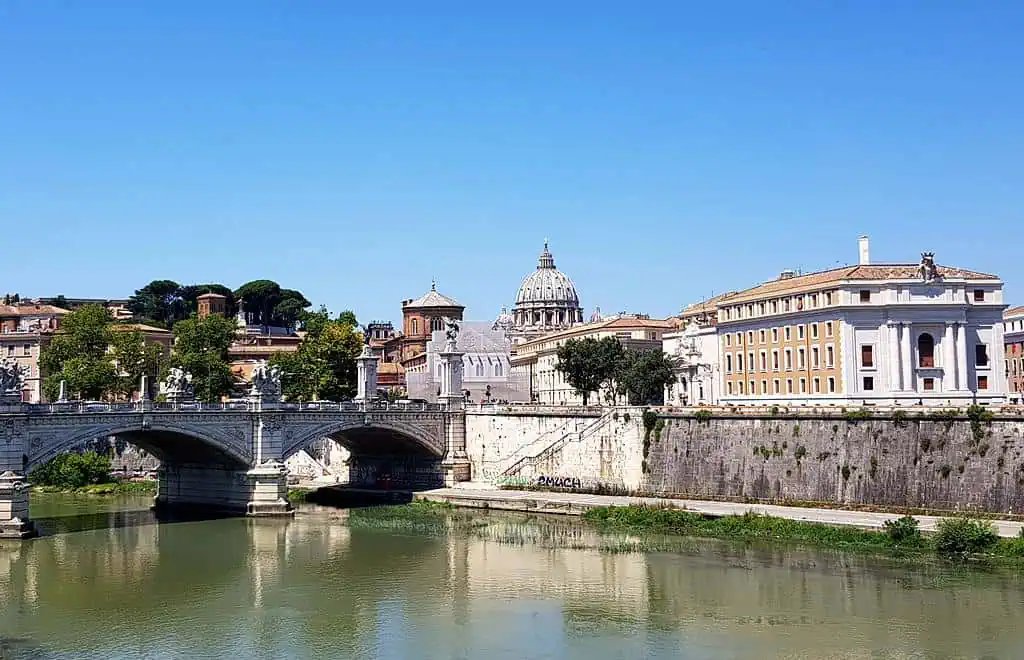
Located along the Tiber River near the Vatican, Castel Sant’Angelo was originally built as the mausoleum of Emperor Hadrian in the 2nd century AD.

Over the centuries it served as a fortress, papal residence, and prison.
Today, it houses a museum and offers panoramic views over Rome from its upper terraces.
Because it is close to St. Peter’s Square, many visitors combine it with a Vatican visit.
Allow about 1–1.5 hours.
What to See in Civitavecchia on a Cruise Stop
If you prefer a slower day or have already visited Rome, spending time in Civitavecchia can be a pleasant alternative.
The town developed as an important Roman harbor and still serves as the maritime gateway to Rome.
Several historical sites and waterfront areas are located within walking distance of the cruise shuttle stop.
Explore Civitavecchia’s Harbor Area
Most visitors begin at Forte Michelangelo, a 16th-century fortress built to protect the port. The central tower is traditionally attributed to Michelangelo.
Nearby, you’ll find the National Archaeological Museum, housed in a former papal residence and displaying Etruscan and Roman artifacts discovered in the surrounding region.
Allow 1–2 hours for a relaxed walk around the harbor and town center.
👉 Browse Civitavecchia walking tours
Visit the Taurine Baths
Located about 5 km (3 miles) from town, the Terme Taurine are among the best-preserved Roman thermal bath complexes in the area.
Also known as the Baths of Trajan, they date back to the 1st century AD and offer insight into ancient Roman bathing culture.
Because the site is outside town, visitors usually reach it by taxi.
Allow about 1–2 hours, including transport.
👉 See excursions to the Taurine Baths
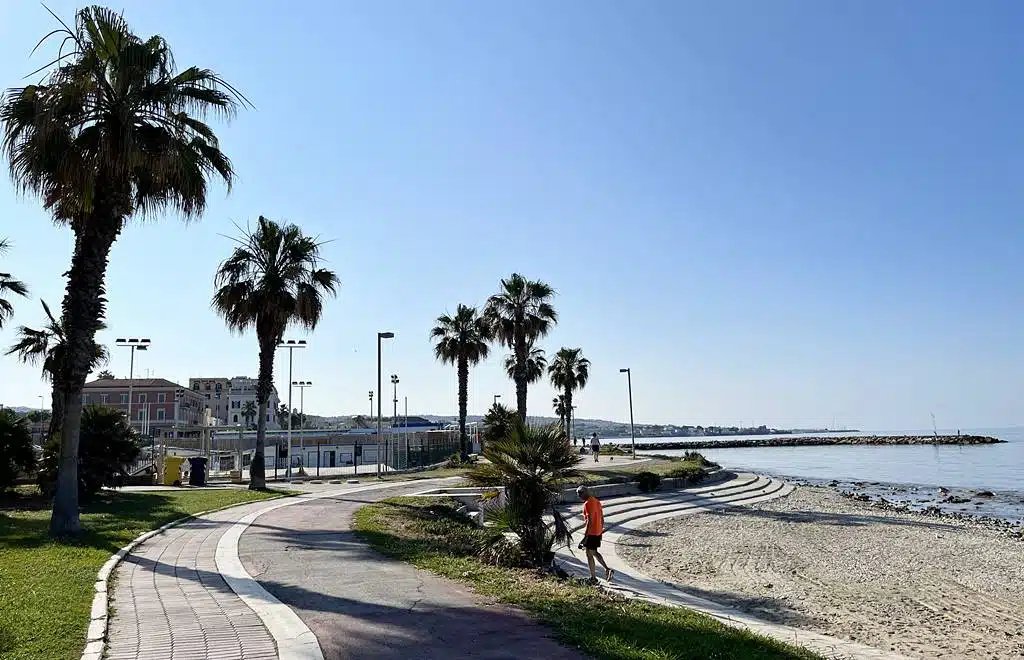
Relax at Il Pirgo Beach
If you simply want a break before returning to the ship, Il Pirgo Beach sits along the seafront promenade near Civitavecchia train station.
The small pebble beach and waterfront walkway provide a relaxed place to enjoy the sea view before heading back to the port.
How Much Time You Need to Visit Rome from Civitavecchia?
Visiting Rome from Civitavecchia on a cruise stop is possible, but it requires good planning.
The journey between the port and Rome usually takes about 1–1.5 hours each way, depending on transportation.
That means a large part of your day will be spent traveling, so it’s best to focus on a few key attractions rather than trying to see everything.
Most cruise ships stay in port 8–10 hours, which usually allows time to visit the historic center, see several landmarks, and return comfortably before the ship’s departure.
🕘 Cruise Tip: If Rome is your main destination, it’s often worth arriving one day before your cruise and staying in the city overnight.
This gives you time to explore major attractions like the Vatican Museums or Colosseum without rushing.
Practical Tips for Visiting Rome from Civitavecchia
- Start early. Leave the ship as soon as possible to maximize your time in Rome.
- Plan your return carefully. Always allow enough time to get back to Civitavecchia before the ship’s all-aboard time.
- Book major attractions in advance. The Vatican Museums and Colosseum often sell out, especially in peak season.
- Wear comfortable shoes. Rome’s historic center is best explored on foot, and distances between landmarks can be longer than they appear.
- Watch your belongings. Pickpocketing can occur in crowded areas like trains, metro stations, and major attractions.
- Bring some cash. Italy uses the euro (€). Credit cards are widely accepted, but small cafés, taxis, and market stalls may prefer cash.
- Expect heat in summer. Temperatures can be very high between June and September, so carry water, sunscreen, and a hat.
- Shopping tip. If you plan to shop for souvenirs, allow time in areas like the Spanish Steps, Via del Corso, or local markets.
Civitavecchia to Rome Cruise FAQ
❓ How far is Civitavecchia from Rome?
Civitavecchia is about 80 km (50 miles) from Rome. By train, the journey usually takes 45–90 minutes, depending on the train type.
❓ Can you visit Rome on your own from Civitavecchia?
Yes. Many cruise passengers travel independently by taking a regional train from Civitavecchia to Rome and exploring the historic center on foot.
❓ What is the easiest way to get from Civitavecchia to Rome?
The most common option is the train from Civitavecchia station to Roma Termini or Roma San Pietro, which runs frequently throughout the day.
❓ Is one day enough to see Rome from a cruise?
Yes, but you’ll need to focus on a few key attractions. Many cruisers visit places like St. Peter’s Basilica, the Colosseum, Trevi Fountain, and the Pantheon in one day.
❓ How do you get from the cruise ship to the train station in Civitavecchia?
Cruise passengers usually take the free port shuttle to Largo della Pace, then walk or take the Port Link shuttle bus to Civitavecchia train station.
❓ Is Rome walkable for cruise visitors?
Yes. Many major landmarks in the historic center are within walking distance, although distances can be longer than they appear on the map.
Helpful Resources
- Civitavecchia Port Authority – port information, terminals, and passenger services
- Trenitalia – train schedules and tickets between Civitavecchia and Rome
- ATAC Roma – Rome public transport information, metro maps, and ticket options
- Vatican Museums official website – tickets, opening hours, and visitor information
- Colosseum official website – ticket booking and entry details for the Colosseum, Roman Forum, and Palatine Hill
- Rome tourism website – official visitor information for attractions and events in Rome
Ports Often Included on Rome (Civitavecchia) Cruise Itineraries
Many Mediterranean cruises that visit Civitavecchia (Rome) also stop at other popular ports in Italy and nearby countries.
These are some ports commonly included on the same itineraries:
- Naples – Gateway to Pompeii, Mount Vesuvius, and the Amalfi Coast.
- Livorno (Florence/Pisa) – Main cruise port for visiting Florence and the Leaning Tower of Pisa.
- La Spezia – Access point for Cinque Terre and Tuscany.
- Palermo, Sicily – Known for its markets, Norman architecture, and nearby coastal towns.
- Barcelona – One of the Mediterranean’s busiest cruise homeports and famous for Gaudí’s architecture.
- Marseille – Gateway to Provence and the picturesque Calanques coastline.
Planning more cruises? You can browse all my regional cruise port guides here: Mediterranean • Caribbean • Northern Europe • USA & Canada • Australia & New Zealand • Middle East